Tuesday, January 7, 2014

Under the Volcano

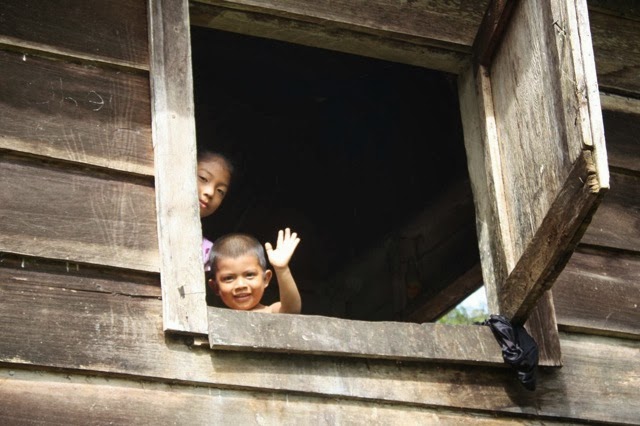
Before recounting what we did today, I noticed that I left out some photographs from yesterday’s account that give a sense of life in the Silico Creek Gnäbe-Buglé community. Education is important to these people. There is a primary school located here. We learned that it has about 90 students. The education here is entirely in Spanish, though the community is concerned about the possible loss of their native language. Students continue to middle school in a nearby town, and then complete secondary education about 25 kilometers away. Some, like our guide, have even completed some university education. 

http://farm8.staticflickr.com/7293/11809558014_26bb802ab6_z.jpg

We were often welcomed inside the homes of the people. The conditions no doubt seemed pretty primitive by our American notions, but what struck me was that everybody seemed to be living together in such a small space quite peacefully. The far superior living standards of Americans does not seem to have made us happier. 

http://farm4.staticflickr.com/3667/11809555454_5b35e09940_z.jpg

Animals are an important part of this community and the lives of the people. Some animals are clearly raised for food even if they are walking around quite freely as the chickens do. But there are definitely companion animals. There are many pet dogs, and some more unusual pets. This is Cula. She is one of the wild “rabbits" indigenous to northwest Panama. She is called Cula or “Tail” because she does not have one. The long nails make these animals adept at burrowing.

http://farm4.staticflickr.com/3756/11809552094_f3c1d9b900_z.jpg

It rained during the night, and in the morning it was still cloudy. Our cabin was not only located at the top of the hill, but at the edge of protected forest. We had a stunning view. We were also able to see some beautiful birds in the morning. I really wished that we had a telephoto lens on the camera so that we could have taken pictures of them. At least we were smart enough to bring along our binoculars. 

http://farm4.staticflickr.com/3735/11810869103_d36a63fdc6_z.jpg

John brought a number of gifts for the children of the village, things like pencils, erasers, notebooks, postcards, and simple English books. It was not long before word was out and soon John many fans in Silico Creek.

IMG 6346

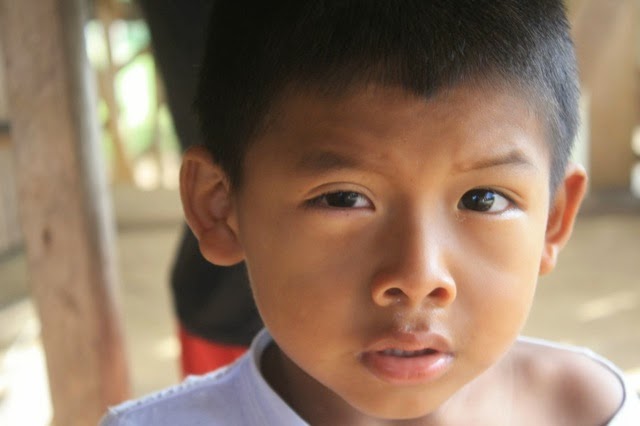
 He not only generously shared his “regalitos” with them, but allowed them to use the binoculars and the camera. They liked taking pictures of each other.
IMG 6400

They particularly liked close ups.

IMG 6408

We had another delicious breakfast, and after that we had a couple hours before the taxi came to pick us up to take us to Boquete. So we did a little exploring. But we were not always by ourselves. Our young friends came to show us coconuts 

IMG 6415

and more of their pets.

IMG 6419

As we went through the village we looked at them

IMG 6438

and they looked at us.

IMG 6436

I found the poverty painful, but I had to also remember what Arnold had told me earlier - they do not think of themselves as poor. They have a strong sense of family and of their identity as a people. They feel connected to the land. I wondered if it would be possible to preserve these things even with a higher standard of living. I wish I knew. 

We had one final delicious meal with our Silico Creek friends. This is not the best possible picture, but I did want to show Arnold’s mother who did all the cooking. She is seated between us. And his uncle, serving the chicken soup on the left, also did the beautiful flower arrangement. 

IMG 6460


http://farm8.staticflickr.com/7303/11818153576_a57cf813a8_z.jpg

 We asked to take a final picture.

IMG 6469

When our taxi finally arrived to take us to south into the mountains, I felt a little sad leaving.

http://farm6.staticflickr.com/5499/11817257385_c3daebe254_z.jpg

Our trip to Boquete took a little over two hours. We had the same driver who took us from Almirante to Silico Creek. The weather was not the best. Not only was it raining, but at times the fog was so dense we could only see a few feet ahead of us. I was glad that our driver seemed to know this windy mountain road well. I could never have driven it in those conditions. The scenery varied as we ascended. Sometimes it was thickly wooded; at other times you could tell that it had been clear cut in the past for lumber. We saw some stunning flowering trees and an occasional waterfall. Along the way we also saw a couple hydroelectric projects. John was taken by the vaguely Soviet-style art at one of them. 

IMG 6489

As we climbed, we became more and more aware of Mount Baru, the volcano that dominates the landscape of western Panama. Not only were we more aware of the mountain, thickly covered with clouds, but we noticed the walls made of basalt boulders. We passed through valleys that must be in the rain shadow of the mountain because the forests were replaced by savannah. 

The town of Boquete, like that of Cuernavaca in Mexico, is not only dominated by a volcano but claims to have a perfect climate of perpetual spring. This has made it popular with Americans seeking to retire more cheaply abroad, and apparently a few years ago lots were selling for near San Francisco prices here. The town itself is not particularly old or beautiful despite the dramatic setting. 

IMG 6502

The “palacio municipal” on the plaza is just an old railroad station. The narrow-gauge line that once connected Boquete with David has been abandoned, but there is still a car left on the square for the amusement of tourists like us.

IMG 6496

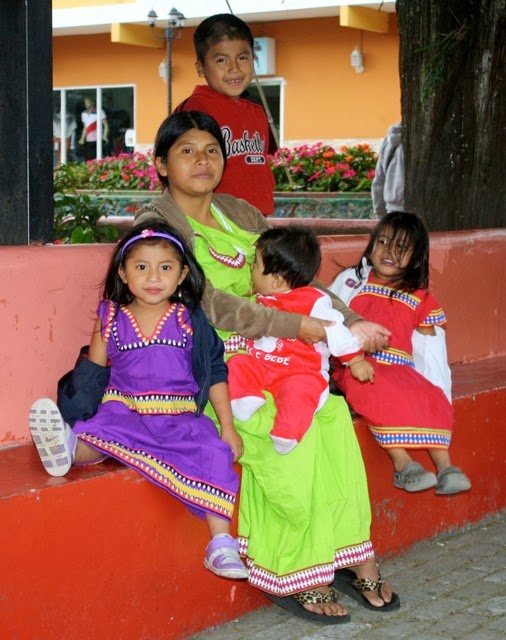
There are obviously some indigenous communities around here because we noticed a number of people in traditional clothing.
IMG 6497

We are staying about 7 kilometers out of town at the Hotel Tree Trek. The last three kilometers of this road are in just wretched condition, and taxis charge 15 dollars or more to come there just because of this. It is a rather odd place, and I am sure I will have more pictures of this alpine hideaway tomorrow. But they did try to make us feel welcome when we arrived. There was a bottle champagne on ice and this very odd bit with some towels. I wonder if this isn’t a honeymoon place for Central Americans.

IMG 6505

John and I had some real drama right away. The moment we took our bags to the room he realized that he had left the camera in the cab. We called Amazing Panama Voyages, the local agency that had helped to arrange our travels here. They are in Panama City, but they called Cesar in Bocas del Toro and he in turn knew the name and phone number of the cab driver. The camera was handed off to us as we took the shuttle from the hotel into town. After exploring Boquete and learning where we can rent bicycles tomorrow, we stopped by a little cafeteria and had some Panamanian food “para llevar” - to go. It was not all that great, but who can complain about a complete meal of rice, beans, vegetables, and stewed chicken for only 3 dollars?

Tomorrow we will do some more exploration of the area. 

Monday, January 6, 2014

Silico Creek

We had to leave Playa Bluff fairly early to leave for Silico Creek on the mainland. We packed our things and we a quiet breakfast. I was sorry we had to leave so soon. It had rained during the night, and somehow I imagined that in the damp early morning the forest would be full of life. But almost exactly at 7:30, the taxi, a Toyota pickup truck painted somewhat incongruously in the traditional Yellow Cab style, came to take us to Bocas town. We stopped along the way at the island’s only ATM, and then met Carlos, our local guide, at the pier. It was a bit of a mob scene as you can see. We ended up switching to another company at a different dock in order to get a boat that left at at a reasonable time.

http://farm4.staticflickr.com/3811/11809528614_824aa61030_z.jpg

They packed us on the boat pretty tightly. I was grateful i had brought my Kindle so that I could think about something other than how much the boat was bouncing over the bay. By this time it had started to rain again, and all I could see was gray water and gray sky anyhow. We arrived at the little town of Almirante. We were met here by another taxi driver again in the same kind of pickup truck taxi. A rock had damaged much of his windshield, and as we started to bounce around I wondered if the glass was going to collapse and fall on John who was sitting in the front with the driver. The town of Almirante seemed covered in trash from one end to another. Even by Central American standards, it was filthy. We drove on fairly quickly, passing a few containers on the waterfront with the cheery Chiquita Banana logo on them.

The road was decently paved, but it twisted and turned as we headed into the mountains. I was glad that John had gone to the pharmacy while we were waiting for the taxi and had found some kind of generic Dramamine. Our driver seemed to know the road well, but I was still a little nervous as he passed other cars on turns. It took about 45 minutes for us to reach Silico Creek. We were met at the local cooperative office which also housed the town’s small ambulance. We were told that our guide was currently at church and that he would be there to meet us in an hour or so. This made me suspect that the church was not the local Catholic parish. 

We did not just want to wait around, so we asked if we could walk and see the community and the church. They seemed to have no idea why John would want to see the church, but they were only too happy to show us around. This is Arnold who became our main guide. His English was pretty rudimentary, but he had a good sense of how to speak Spanish to foreigners, and he really became our main guide for the day. There are about 500 people living here, and the community is build on a hillside.

http://farm8.staticflickr.com/7405/11809122185_edf21c011c_z.jpg

Silico Creek is a settlement of the Ngäbe-Buglé people, one of the three principal indigenous groups in Panama. Many of the houses there are build in the traditional style with stilts and a thatched roof. 

http://farm8.staticflickr.com/7380/11809373903_243ba6ef2f_z.jpg

When we arrived at the church my suspicions that this is a Protestant settlement were confirmed. While we could not get a sense of what groups had done missionary work here, Arnold confirmed that the people in the town were “evangelicos” and that the church service would be particularly lengthy today because they were also having the annual meeting to discuss their budget. The pastor was leading this when we entered.

http://farm3.staticflickr.com/2858/11809534964_58dc431d6b_z.jpg

While many of the adults were quite engaged in the discussion of how much money they needed for this or that, the children were clearly bored and found the white visitors intriguing. 

http://farm3.staticflickr.com/2822/11809128595_9f54846dd2_z.jpg

We were treated to lunch. The community has only recently added housing for visitors, and while probably about 12 people could be accommodated here at one time, John and I were the only visitors today. It was a slightly uncomfortable situation to have four or five people watching the two of us eat. But the food was great! They had rice and friend plantains, of course, and the main dish was a delicious fried fish. Notice the limes next to the fish. This is a local variety with orange flesh and a slight sweetness to the taste. I am surprised they are not found in gin and tonics throughout the world.

http://farm3.staticflickr.com/2828/11809873846_77176674fd_z.jpg

We also met other residents of Silico Creek. There are a lot of dogs in this community, but they are not feral. Pets seem quite important to the people here. This is Reina. She is about a year old and as friendly as can be. We were taken with her eyes. 


http://farm3.staticflickr.com/2860/11809875726_e4f5cd7db6_z.jpg

After lunch, we were taken on a tour of the local organic cacao production. Along the way John heard some activity from a small cement building. He asked Arnold about it, and was told that this is where the men play dominos. Like good Protestants they did not seem to gambling, but the competition was still vigorous.

http://farm8.staticflickr.com/7333/11809134075_8b3343ab1e_z.jpg

As we crossed the highway to the cacao  farm, I noted the emblem of the “comarca” or regional autonomous authority. Notice the use of the term “sostenible” or “sustainable.” This, we learned, is really important to these people whose food production is entirely organic.

http://farm4.staticflickr.com/3709/11809544584_1e03056e2a_z.jpg

I had never seen cocoa growing before, so I was little surprised to see that it grows in these large pods in trees. The trees are not shaded, like coffee, but they grow best in extreme humidity so they are typically planted alongside banana and other tropical plants. Five different types of cacao are grown in this little plot. Each kind has a different color, and each apparently a slightly different flavor.

http://farm8.staticflickr.com/7392/11809138385_22d114164e_z.jpg

When the fruit is ripe, it is picked. The seeds are in the center covered with a sweet, sticky white fluid. The seeds at this point cannot really be eaten. Instead, they are taken out of the fruit and placed in a dark box and allowed to ferment for about a week.

http://farm4.staticflickr.com/3793/11809548424_0c085c3bbc_z.jpg

When the seed have fermented and any remaining fluid has evaporated away, they are then sun dried for three to five days. We saw a couple different kinds of platforms for this, but this one, where the trays slid in and out, seemed to be the largest. 

http://farm6.staticflickr.com/5517/11809401533_755bae8087_z.jpg

The dried beans are then quickly roasted rather like coffee. This causes the skin on the outside of the seed to fall off. 

http://farm6.staticflickr.com/5550/11809898056_b13a8f5443_z.jpg

The seeds are then ground, and you have this lovely but somewhat bitter chocolate paste. 

http://farm8.staticflickr.com/7327/11809406503_6c87c64edd_z.jpg

Grinding the seeds in an old-fashioned meat grinder is frankly hard work! 

http://farm8.staticflickr.com/7453/11809159235_c877f0c684_z.jpg

Unfortunately, I was stepping backwards into some mud as I was taking this shot, and this is what happened!

http://farm8.staticflickr.com/7438/11809411063_bc3d81ed7a_z.jpg

They took us down to the cooperative office where there was the only shower in town. It was not glamorous and the water was cold! But I cleaned up reasonably well, and they offered to wash our clothes for us for only a nominal amount. We went to our rooms. We are staying in a traditional Ngäbe-Buglé house - though if it were really traditional, probably about 10 people would be living there. There is basically a bed. There is no bathroom, though an outhouse is located about three or four meters away. There is some wiring for electricity, but running the generator is expensive and so we had no electricity. Looking down the hill - our accommodations are at the very top with a magnificent view of the surrounding mountains and rain forest - nobody else in Silico Creek had electricity that night, either.

http://farm3.staticflickr.com/2805/11809415533_4139260520_z.jpg

They again fed us a wonderful dinner. I am not completely sure what the main dish was. It was a “guisado” or stew, and neither John nor I could quite identify the meat. But sure was tasty!
 
Sitting on the deck as night fell was pleasant, at least once I had sprayed myself from head to toe with Off. 
 
http://farm8.staticflickr.com/7428/11809907616_81bd1da1cb_z.jpg
 
Tomorrow we head further up into the mountains to the Boquete. 

Saturday, January 4, 2014

Playa Bluff

After three days, we had become surprisingly fond of Bocas Town. There’s something about the place that charms you despite the all the drunken tourists, all the trash on the street, and all that noise all night. It’s a lively and friendly place. We were particularly sad to leave the wonderful staff at the Bocas del Toro hotel, particularly our favorite, Johayvi at the front desk. We were originally supposed to go today spend two days with a group of Embera people, but at Carlos’ suggestion we decided to spend another day on Isla Colon, this time about a half hour out of Bocas Town on Playa Bluff or Bluff Beach. A taxi came to pick us up a little after ten. There was already another passenger there, a handsome but somewhat taciturn Swede named Adam. He lives in Stockholm and works in mergers and acquisitions. Like us, he had spent some time in Panama City before coming here, but he stayed at the Waldorf Astoria. We move in different circles. 

The road to Bluff Beach turns into mud and ruts only a short way out of town. We were surprised when the cabbie told us that it had once all been paved, but that a large earthquake some years ago had caused the coral reef to drop and that exposed the road to the surf, washing it away. We had always heard that Panama did not get earthquakes. I guess they only get the less frequently than some of their Central American neighbors. 

I am not sure why that call it Bluff Beach because there is nothing that would strike any Californians as anything that even looked passably like a bluff. But it is the longest, loveliest, and emptiest stretch of Caribbean beach you can imagine. The sand in soft and a striking reddish-gold. John and I enjoyed walking up and down it. 

IMG 6195

The waves here are notoriously treacherous and there are deadly riptides. So the only people who go in the water are surfers. It’s one of the best surfing spots in Central America.

IMG 6185

John and I decided to walk through the jungle to see if we could see howler monkeys or sloths. We did not, unfortunately, though we did hear and see some fantastic birds. 

IMG 6210

At the end of one of the trails we found these basalt outcroppings. These began to suggest to us a little of the geological history of this area.

IMG 6200

The hotel is fairly isolated, but it surprised us - and not always in a good way - what are party scene the area is. The Playa Bluff Lodge had a restaurant and bar on the property. There were a steady stream of surfers and other stopping by for a drink - well, we should be honest and admit that most had more than one - and maybe a bit to eat. There was quite a stir when these three showed up. We learned later that the one on the right is Felipe Beloj, a famous Panamanian football star. 

IMG 6212

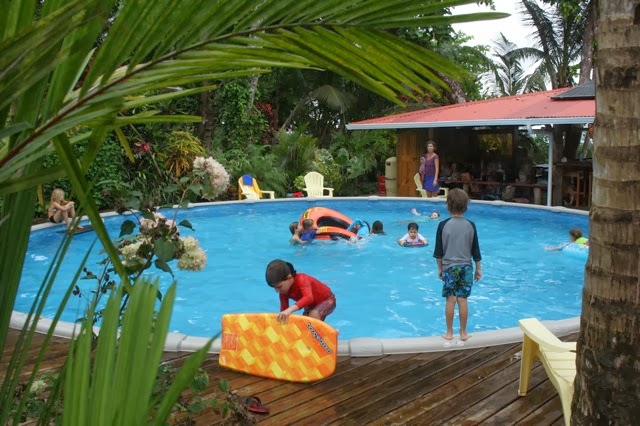
The bar at our hotel has made some effort to be kid-friendly with a pool in the back. This allows mommy and daddy to get a little sloshed while the kids were relatively safe. 

IMG 6224

There was a second bar located right next to our hotel. It was a much wilder scene and the loud music was still going strong well after sunset. I think the drinks may have been cheaper and stronger because it was filled with surfers. The special tourist police also paid a visit while we were there. 

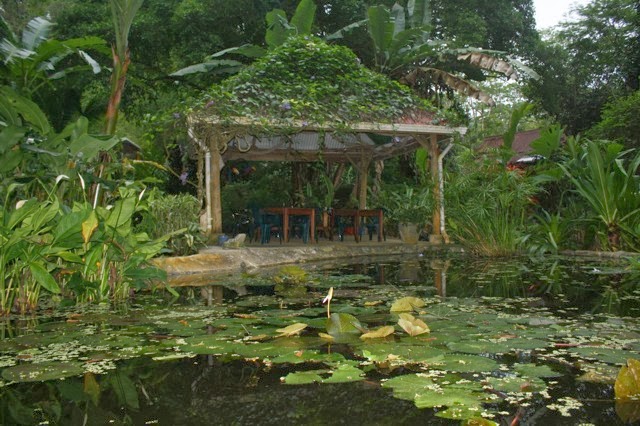
The rooms at the Lodge are pretty spartan. The best party of the property is the garden behind the hotel. There are a remarkable number of tropical plants. While some are planted like trophies, many others have been artfully combined to create an effect of great tranquility and beautify. 

IMG 6233

IMG 6216

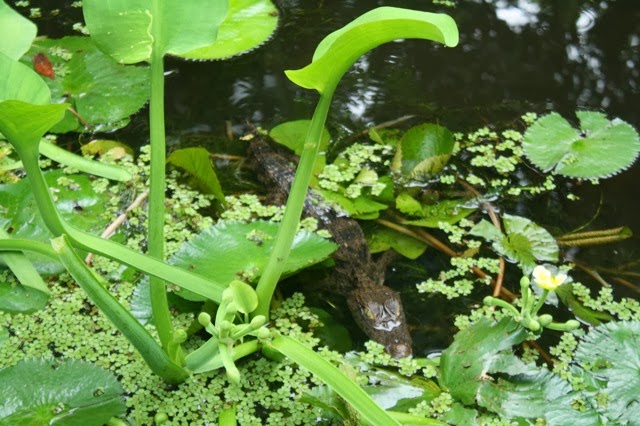
We were assured that a sloth lives in a tree there, but we never managed to see it. Nor did we see any howler monkeys who are also known to pay a visit. We did see the resident alligator. 

IMG 6215

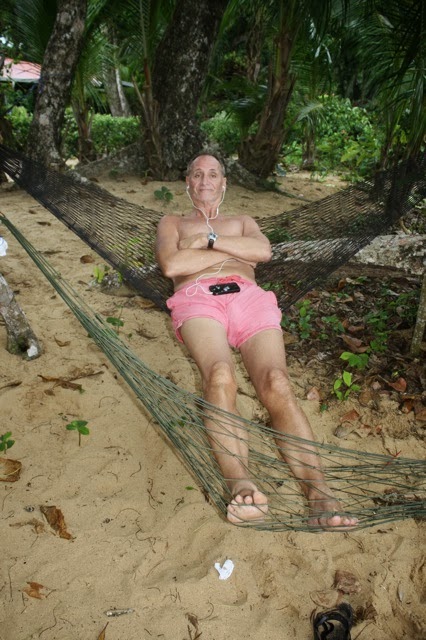
By late afternoon the crowds on the beach began to thin and John could not only find one hammock, but two. He found this a perfect spot for listening to the sound of the waves and his Andrew Byrd playlist. 

IMG 6226

IMG 6227

At dinner we met a young couple from Ontario. They were staying at a nearby hotel. It turned out they had both trained to be PE teachers, so we were able to talk school shop for a bit. We also talked a good deal with Michelle who manages the restaurant and helps with hotel. She moved here recently from Toluca Lake. She really likes living in Panama, but admitted  that the lack of internet service on Bluff Beach is giving her major Facebook withdrawals. 

IMG 6179

We also met the owners of the Lodge, a Dutch couple named Helen and Dieter. Helen has a lot of energy! She speaks Spanish fluently but with what even I could hear as a strong Dutch accent! They have a house in Bocas town and return there at night with their daughter. 

IMG 6241

Tomorrow we have to get up early because we are headed inland to Silico Creek to spend some time in a indigenous community.