Wednesday, January 8, 2014

Just Possibly Paradise

Our final morning in Boquete was clear

http://farm3.staticflickr.com/2838/11845859485_bcdef2948e_z.jpg

but still quite cool!

http://farm6.staticflickr.com/5494/11853276683_4acd0dfd5a_z.jpg

There was some problem - we never quite figured out what it was - with our transit to the Pacific Coast. The driver did arrive, but over an hour late. We liked him. His name was Alexander and he spoke pretty good English. He took us through the back route to Boca Chica and along the way explained a little of what we were seeing. I wish I had taken pictures here of some of the different landscapes. It was definitely far drier than on the Caribbean coast, and much of it reminded me of the scrub Mesquite forests in parts of north Texas. We went by several hydroelectric projects, and he told us about how much the indigenous people fought the construction of these dams. It took us about two hours to make it from Boquete to Boca Chica. We had told Suzie, our fabulous travel agent, that we wanted to end the trip with a bit of a splurge, and a place where all we would want or need to do would be to sit on the beach or by the pool! She hit a home run by picking the Hotel Bocas del Mar!

http://farm3.staticflickr.com/2854/11847728223_25711b93a3_z.jpg

The hotel is owned by a Belgian family, and we were warmly greeted by Joost, who spoke impeccable English with a hint of a Flemish accent. Our room was not yet ready as it was only about noon, so we had lunch. 

http://farm3.staticflickr.com/2873/11847865994_aa7a3d8a98_z.jpg

When we were shown to our room, it had an utterly fabulous view. And there was a bucket of champagne there because I think they had been told that this was sort of our honeymoon!

http://farm4.staticflickr.com/3751/11847452565_6922bd7f7e_z.jpg

I could spend the rest of my life on the deck here. 

http://farm4.staticflickr.com/3773/11847732043_dd42ca7bd7_z.jpg

Except the view from the bathroom is pretty stunning, too!

http://farm8.staticflickr.com/7431/11848252546_f76622095c_z.jpg

Just below our room, number 15, there is an infinity pool.

http://farm8.staticflickr.com/7373/11847457495_6b437df5a9_z.jpg

I found it almost impossible to not spend the whole afternoon in it!

http://farm6.staticflickr.com/5549/11848255246_93783de291_z.jpg

In the evening, John was taken with the beautiful clouds.

http://farm3.staticflickr.com/2883/11848258106_05a46b7e45_z.jpg

The sunset was gorgeous.

http://farm3.staticflickr.com/2880/11847876494_f731dd0db1_z.jpg

We had a fine dinner. The service was slow, but the wifi was fast, so I was more than content. 

Tomorrow will be our last real day of vacation as Friday will be most about getting transported back to Panama City for our flight Saturday morning. A couple of you have asked about Edie. She has been in great hands with Jason and Heather while we have been gone. In fact, she seldom get trips to Runyon Canyon with us!

IMG_20140103_153432

Tuesday, January 7, 2014

Onward and - Gasp - Upward

When we woke up, not only had it rained fairly hard during the night, but it was quite cold in our room. And I suppose because we are somewhere between the Tropic of Cancer and the equator, they decided we did not need a heater in the room. Of course, even if there had been one, the electricity did not really turn on until close to seven o’clock. So we hurried tossed on some warm clothes and went over to have breakfast. As we did, we took another look at our hotel. It is built in a vaguely mid-century alpine style. 

http://farm8.staticflickr.com/7397/11829677745_102d48da43_z.jpg

In addition to the main lodge section, which looks sort of like a motel, there are a few “cabañas.” John had thought about asking for one of these, but they did not really have any better views than our room did. 

http://farm3.staticflickr.com/2810/11829946353_852e4c8aaa_z.jpg

The main attraction for Tree Tree is its zipline, one of the longest in Central America. We watched tourists get suited up and listen to the safety instructions. 

http://farm3.staticflickr.com/2877/11846289154_885a1bb0d1_z.jpg

Breakfast was not that exciting. The hotel room came with the “continental” breakfast, basically a couple pieces of toast, some fruit, orange juice, and coffee. John decided to order some pancakes, too. 

We caught the shuttle from the hotel down to town. It was just the two of us and several large plastic trash bags filled with used linens. They dropped us off right by the stall where we had figured out the day before we could rent the bike. There were a few other stalls here including this place selling fruit. There was also another stall with a man selling a “jungle remedy” that was supposed to cure everything. I wish I had taken a picture of that instead. 

http://farm3.staticflickr.com/2870/11830474786_50f29145cd_z.jpg

The bike rental was run by a transplanted Southern Californian named Mike. We talked to him about doing the Baja Mono route. He smiled, told us it was “great,” but did mention that it was “all uphill.” I did not have any idea just how true that would be. 

We adjusted our seats and started riding out of town. We had read in a guidebook about a great garden called, not that creatively, “Mi Jardin es Su Jardin.” We had been told, however, the owner had died and that it was now seldom open to the public. Indeed, when we came there, we discovered that it was “cerrado."

http://farm6.staticflickr.com/5493/11830478546_54a631afeb_z.jpg

Our next stop was Cafe Ruiz, one of the major producers of high-quality coffee in Panama. I had read in the Moon guide that they had a great tour, but when we arrived we learned that the tours were at nine and at one. Since it was ten thirty at this point, we were too late for the first and far too early for the second. We bought a cup of coffee and a pound of beans and pushed onward. 

http://farm8.staticflickr.com/7444/11830103774_4aec79bedf_z.jpg

It had been so cold when we left the hotel that both of us brought along jackets. By this time, we stuffed them in the backpack. We also had a couple guidebooks, bottles of water, and the coffee in the backpack. It was heavy, though I didn’t mind it so much when the road was flat. 

http://farm4.staticflickr.com/3776/11845853025_a5a92001fb_z.jpg

But as the road started its relentless incline, I not only felt the weight of 25 pounds or so on my back but I became keenly aware that we are at about 4000 feet above sea level here. I ride a bike nearly every day at home. I walk the dog three or four miles a day. I figure I am in generally pretty good shape. But I could barely make it 250 feet without stopping to gasp for breath. I felt like I had emphysema. 

Sometimes we stopped because there was something interesting. The coffee harvesting season is starting right now, and there were coffee plants growing on the fields by the side of the road. I suspected that most of the labor to harvest the crop was probably provided by the indigenous people. This man, probably from the Ngäbe-Buglé people, kindly allowed us to take his picture.

http://farm4.staticflickr.com/3776/11837874896_9b307ece91_z.jpg

One of the main attractions along the Baja Mono route is this “cascada” or “waterfall.” It really was not all that impressive, but we were both so winded that we would have stopped for just about any reason. 

http://farm6.staticflickr.com/5515/11837374713_5b58349c13_z.jpg

The other attraction along the route is the “haunted castle” of Boquete. No two accounts of this place are precisely the same, but the story is usually something like this. A wealthy American married a Dutch woman and wanted her to live with him in Boquete. She was not happy about the housing choices here, so she moved back to the Netherlands while he built her a more proper house. He built a huge house in the countryside north of Boquete. But when the house was nearly finished, he died of a heart attack. Neither he nor his wife ever lived there. There were a couple tenants, but they all declared that the house was haunted and moved out. It has been abandoned now for over forty years. 

http://farm3.staticflickr.com/2853/11837378353_7cbb0d4fb6_z.jpg

I have no idea how much of this is really true. But we did decide that somebody had already cut a hole in the cyclone fence, we would explore the place. Most of the windows have been smashed, and the inside is creepy enough even if there are no ghosts. 

http://farm8.staticflickr.com/7449/11837382743_c2788a82e6_z.jpg

Vandals with spray paint have also been visitors here. 

http://farm4.staticflickr.com/3820/11837388903_ca9986782d_z.jpg

We did not finish the whole loop. Another cyclist had told us that the road really started to climb after the castle, and we decided that we had traveled enough of the route. Of course, the return was much easier. We saw some unusual sights along the way including this tree trunk carved to look like a serpent

http://farm8.staticflickr.com/7362/11837083735_d8246612f0_z.jpg

and this scarecrow. 

http://farm6.staticflickr.com/5483/11837112125_02c7404326_z.jpg

We had a well-deserved cup of ice cream and caught the shuttle back to the hotel. Tree Trek is only seven kilometers from the center of Boquete, but what a difference that short distance makes. It had been warm and sunny in Boquete. At the hotel it was cold and raining! We sat on the little patio outside our room and watched the people on the zip line go through the air in the rain. I was glad I was somewhere dry. 

http://farm6.staticflickr.com/5512/11837902896_736d967786_z.jpg

We decided to walk to town for dinner rather than sit in a somewhat chilly hotel room watching television. As we left the hotel grounds, we discovered a small botanical garden. 

http://farm6.staticflickr.com/5485/11830480786_40d284ac7c_z.jpg

Despite the drizzle the walk to town was just magical - at least the first three or four kilometers. The most striking thing about this area is the incredible profusion of bromeliads. Just about any tree has a few on them, and some trees are completely covered in a dozen different varieties. 

http://farm4.staticflickr.com/3757/11829692595_500e47c152_z.jpg

We also saw “fincas” or small plantations of coffee and bananas on either side of the road along with the occasional pasture. As we turned from the Tree Trek road onto the main highway, the rain stopped. As it approached sunset, the light on the damp landscape was beautiful.

http://farm3.staticflickr.com/2855/11830488266_44cc82d3c5_z.jpg

It was dark by the time we arrived in town. Just on the far side of the river, the final preparations for this weekend’s Flower and Coffee Festival continued. The music stages and some of the exhibit spaces were still not finished. 

http://farm4.staticflickr.com/3816/11830490106_5c9b370422_z.jpg

The gardens, however, are definitely finished.

http://farm4.staticflickr.com/3722/11830491936_8621b18402_z.jpg

John and I split some fried rice for dinner. It was not particularly easy, but we managed to finally convince a taxi to take us back to the hotel.

Under the Volcano

Before recounting what we did today, I noticed that I left out some photographs from yesterday’s account that give a sense of life in the Silico Creek Gnäbe-Buglé community. Education is important to these people. There is a primary school located here. We learned that it has about 90 students. The education here is entirely in Spanish, though the community is concerned about the possible loss of their native language. Students continue to middle school in a nearby town, and then complete secondary education about 25 kilometers away. Some, like our guide, have even completed some university education. 

http://farm8.staticflickr.com/7293/11809558014_26bb802ab6_z.jpg

We were often welcomed inside the homes of the people. The conditions no doubt seemed pretty primitive by our American notions, but what struck me was that everybody seemed to be living together in such a small space quite peacefully. The far superior living standards of Americans does not seem to have made us happier. 

http://farm4.staticflickr.com/3667/11809555454_5b35e09940_z.jpg

Animals are an important part of this community and the lives of the people. Some animals are clearly raised for food even if they are walking around quite freely as the chickens do. But there are definitely companion animals. There are many pet dogs, and some more unusual pets. This is Cula. She is one of the wild “rabbits" indigenous to northwest Panama. She is called Cula or “Tail” because she does not have one. The long nails make these animals adept at burrowing.

http://farm4.staticflickr.com/3756/11809552094_f3c1d9b900_z.jpg

It rained during the night, and in the morning it was still cloudy. Our cabin was not only located at the top of the hill, but at the edge of protected forest. We had a stunning view. We were also able to see some beautiful birds in the morning. I really wished that we had a telephoto lens on the camera so that we could have taken pictures of them. At least we were smart enough to bring along our binoculars. 

http://farm4.staticflickr.com/3735/11810869103_d36a63fdc6_z.jpg

John brought a number of gifts for the children of the village, things like pencils, erasers, notebooks, postcards, and simple English books. It was not long before word was out and soon John many fans in Silico Creek.

IMG 6346

 He not only generously shared his “regalitos” with them, but allowed them to use the binoculars and the camera. They liked taking pictures of each other.

IMG 6400

They particularly liked close ups.

IMG 6408

We had another delicious breakfast, and after that we had a couple hours before the taxi came to pick us up to take us to Boquete. So we did a little exploring. But we were not always by ourselves. Our young friends came to show us coconuts 

IMG 6415

and more of their pets.

IMG 6419

As we went through the village we looked at them

IMG 6438

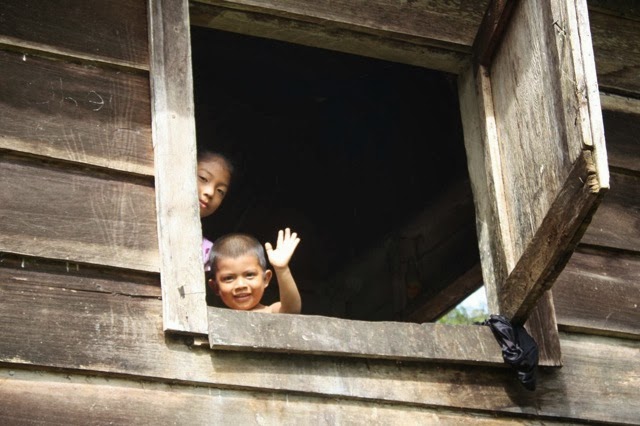
and they looked at us.

IMG 6436

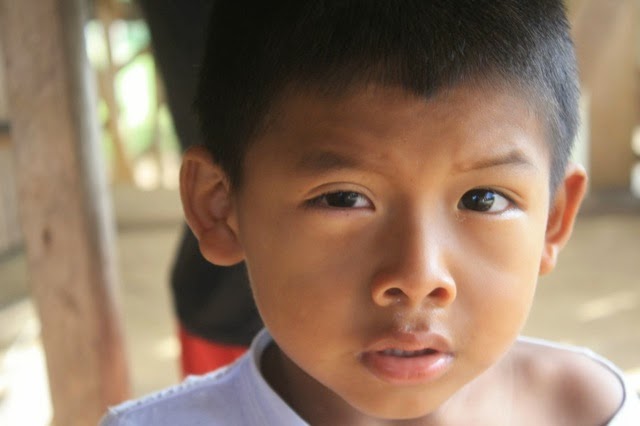
I found the poverty painful, but I had to also remember what Arnold had told me earlier - they do not think of themselves as poor. They have a strong sense of family and of their identity as a people. They feel connected to the land. I wondered if it would be possible to preserve these things even with a higher standard of living. I wish I knew. 

We had one final delicious meal with our Silico Creek friends. This is not the best possible picture, but I did want to show Arnold’s mother who did all the cooking. She is seated between us. And his uncle, serving the chicken soup on the left, also did the beautiful flower arrangement. 

IMG 6460


http://farm8.staticflickr.com/7303/11818153576_a57cf813a8_z.jpg

 We asked to take a final picture.

IMG 6469

When our taxi finally arrived to take us to south into the mountains, I felt a little sad leaving.

http://farm6.staticflickr.com/5499/11817257385_c3daebe254_z.jpg

Our trip to Boquete took a little over two hours. We had the same driver who took us from Almirante to Silico Creek. The weather was not the best. Not only was it raining, but at times the fog was so dense we could only see a few feet ahead of us. I was glad that our driver seemed to know this windy mountain road well. I could never have driven it in those conditions. The scenery varied as we ascended. Sometimes it was thickly wooded; at other times you could tell that it had been clear cut in the past for lumber. We saw some stunning flowering trees and an occasional waterfall. Along the way we also saw a couple hydroelectric projects. John was taken by the vaguely Soviet-style art at one of them. 

IMG 6489

As we climbed, we became more and more aware of Mount Baru, the volcano that dominates the landscape of western Panama. Not only were we more aware of the mountain, thickly covered with clouds, but we noticed the walls made of basalt boulders. We passed through valleys that must be in the rain shadow of the mountain because the forests were replaced by savannah. 

The town of Boquete, like that of Cuernavaca in Mexico, is not only dominated by a volcano but claims to have a perfect climate of perpetual spring. This has made it popular with Americans seeking to retire more cheaply abroad, and apparently a few years ago lots were selling for near San Francisco prices here. The town itself is not particularly old or beautiful despite the dramatic setting. 

IMG 6502

The “palacio municipal” on the plaza is just an old railroad station. The narrow-gauge line that once connected Boquete with David has been abandoned, but there is still a car left on the square for the amusement of tourists like us.

IMG 6496

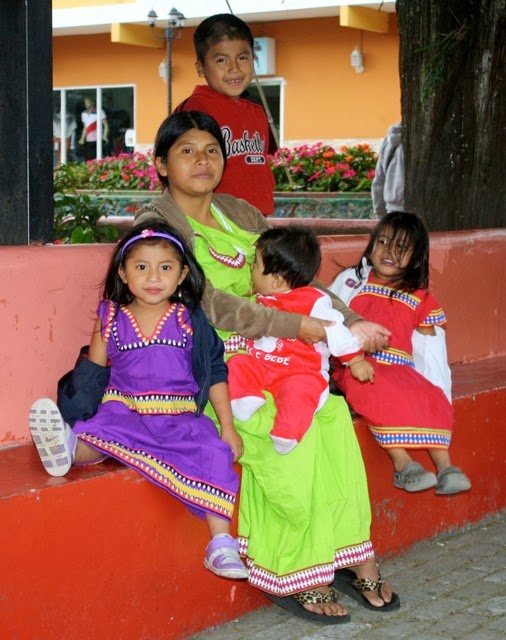
There are obviously some indigenous communities around here because we noticed a number of people in traditional clothing.

IMG 6497

We are staying about 7 kilometers out of town at the Hotel Tree Trek. The last three kilometers of this road are in just wretched condition, and taxis charge 15 dollars or more to come there just because of this. It is a rather odd place, and I am sure I will have more pictures of this alpine hideaway tomorrow. But they did try to make us feel welcome when we arrived. There was a bottle champagne on ice and this very odd bit with some towels. I wonder if this isn’t a honeymoon place for Central Americans.

IMG 6505

John and I had some real drama right away. The moment we took our bags to the room he realized that he had left the camera in the cab. We called Amazing Panama Voyages, the local agency that had helped to arrange our travels here. They are in Panama City, but they called Cesar in Bocas del Toro and he in turn knew the name and phone number of the cab driver. The camera was handed off to us as we took the shuttle from the hotel into town. After exploring Boquete and learning where we can rent bicycles tomorrow, we stopped by a little cafeteria and had some Panamanian food “para llevar” - to go. It was not all that great, but who can complain about a complete meal of rice, beans, vegetables, and stewed chicken for only 3 dollars?

Tomorrow we will do some more exploration of the area.